I know, I know. The words healthy and cooking, when used together, aren’t really my thing. My thing is more:

But I was contacted by Bridget Sandorford and I decided you guys all need to start eating healthy. Not me. Just you guys. I’m just trying to help you all. SO, Bridget has prepared an article today about healthy flour substitutes. Sadly, I hadn’t even heard of a couple of them. Okay, I’ve never heard of any of them (see picture above). But now we’re ALL going to learn about them. Bridget…take it away:
Healthy Flour Substitutions
Flour is found is dozens of foods that we all love, from cakes and cookies to pasta and bread. However, most of the time, the flour used in these foods is refined white flour that is nutritionally devoid. In addition, more and more people are discovering that they have a sensitivity to gluten and are cutting it out of their diets.
Fortunately, there are a number of ways you can enjoy the dishes you love simply by making a few healthy substitutions for the flour used in your recipe. Here are a few ideas for some healthy flour substitutions that you can try:
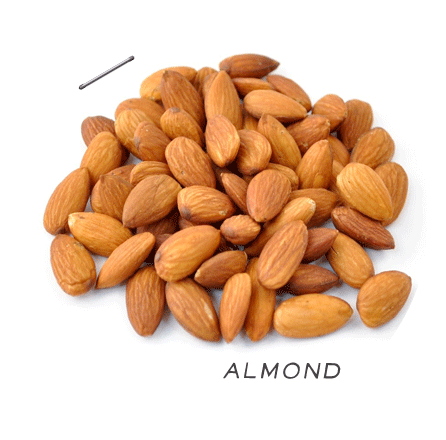 Almond Flour
Almond flour, or almond meal, is a great gluten-free flour that also has a lot of protein. You won’t be able to substitute your flour one-to-one. Instead, you can use 1/4 cup of almond flour for every cup the recipe calls for. That means using 1/4 cup of almond flour with 3/4 cup of another flour. You may also have to increase your liquids and reduce your cooking temperatures as much as 20 degrees. Experimentation is key to find the right adjustment.
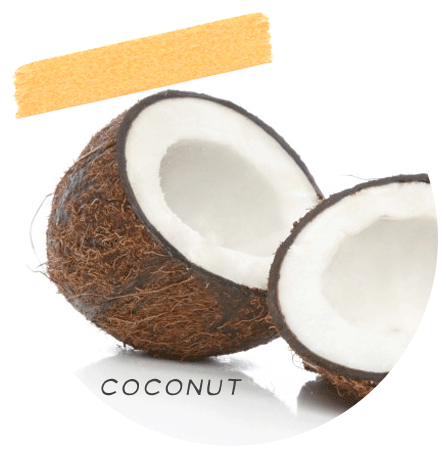 Coconut Flour
Coconut flour has among the highest fiber content of any flour you can use. It is also packed with other nutrients, making it a very healthy choice. You can replace all of the flour in a recipe with coconut flour, but you’ll also have to increase your liquids. Typically, one egg per one cup of flour should do it. Again, experimentation is key to find out what works best for each recipe.
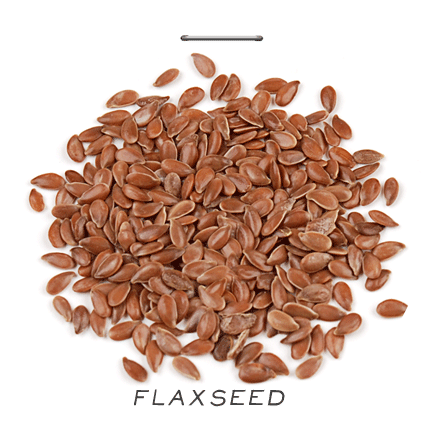 Flaxseed Flour
Flaxseed has tons of fiber and healthy fat, in addition to antioxidants and other health benefits. Like almond flour, flaxseed flour is more of a meal, made of ground up seeds. Also like almond flour, you’ll have to use about 1/4 cup of flour for every cup that the recipe calls for, and you’ll have to lower the cooking temperature to prevent over-browning.
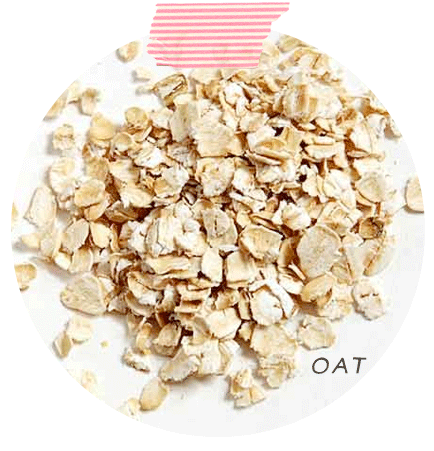
Oat Flour
Oat flour has a lot of fiber and is loaded with health-promoting B vitamins. To use it in your recipe, substitute 1-1/2 cups for every cup that is included in the recipe. You should be able to use the flour in any recipe without noticing a different in taste or consistency.
There are many other healthy flour substitutions that you might try in your recipes, include rice flour, potato flour, and soy flour. Experiment with these or even try a combination to find out what works best for you to create a low-carb or gluten-free option that is loaded with more nutrients.
What flours do you use in your recipes to make healthy substitutions? Share your tips in the comments!
About the Author:
Bridget Sandorford is a freelance food and culinary writer, where recently she’s been researching Italian cookery schools. In her spare time, she enjoys biking, painting and working on her first cookbook.

Pin It



